Boiler types
Biomass boilers: cost, grants and running costs
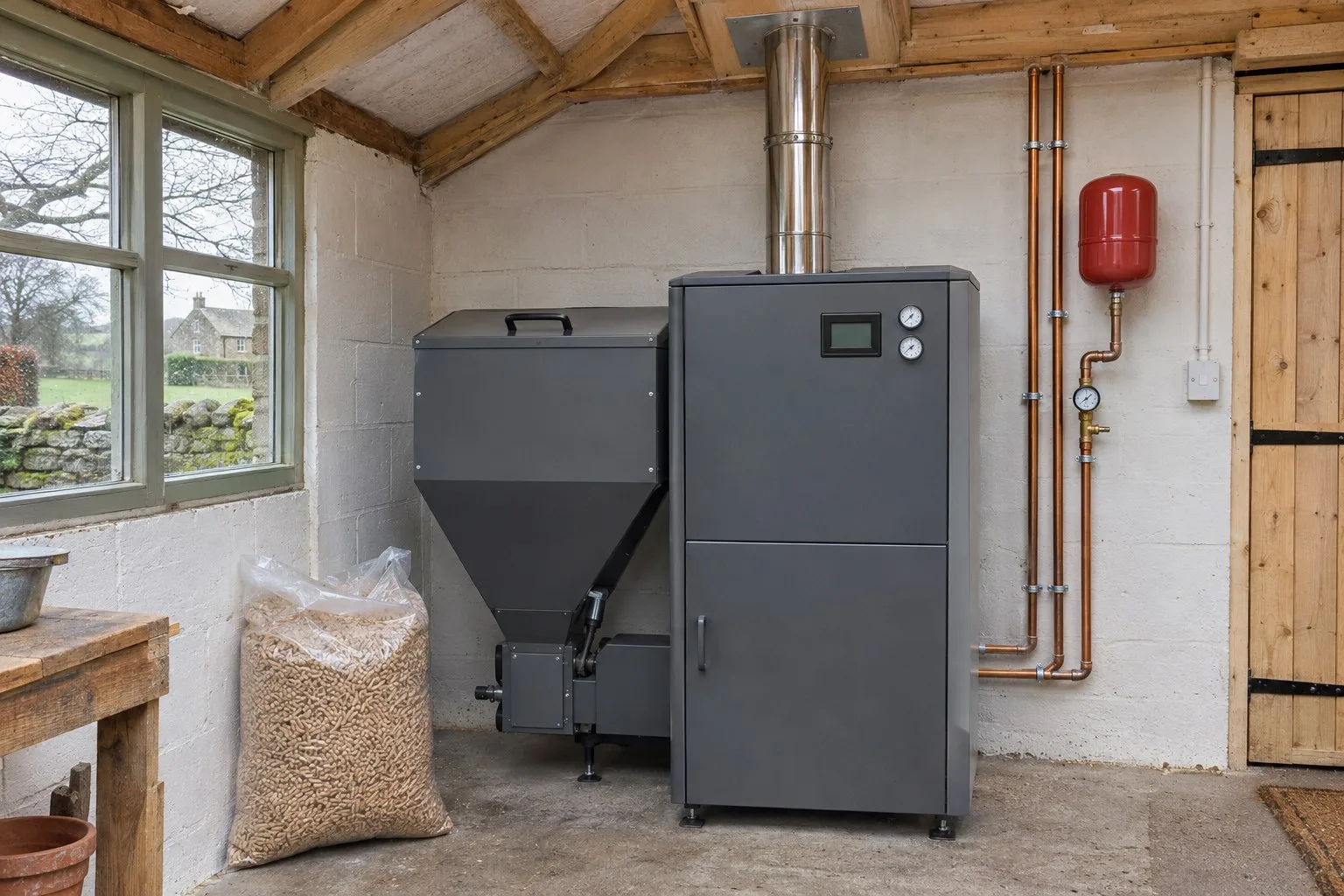
A biomass boiler burns logs, pellets or chips and connects to your central heating and hot water, so it replaces a gas, oil or LPG boiler. The Energy Saving Trust puts an automatically fed pellet boiler for an average home at around £9,200 including installation, before any grant. In England and Wales the Boiler Upgrade Scheme pays £5,000 towards one, which the installer should take off your quote. It is a lower carbon choice, but not usually a cheaper one to run.
What a biomass boiler is
Biomass fuel is organic material such as wood, plants, manure or household waste. For heating a home, wood fuel is the obvious choice. There are two main types of biomass heating. Biomass stoves burn logs or pellets to heat a single room, and some come with a back boiler to heat your water. Biomass boilers burn logs, pellets or chips and connect to a central heating and hot water system, which is the type this page covers.
What a biomass boiler costs
The figure above is for an average home with an automatically fed pellet boiler. Pellets are the main running cost. If you have room for a large fuel store that holds several tonnes at a time, you can keep the price around £400 a tonne. Logs can be cheaper, but the price depends on local suppliers because logs are expensive to transport. You can save money by buying unseasoned logs and letting them dry for at least a year, but that needs room to store more than a year’s worth.
If you already have a modern condensing gas boiler, the Energy Saving Trust says a biomass boiler is likely to cost you more to run. That is the main reason biomass makes most sense for homes off the gas network, where the comparison is with oil or LPG.
Biomass boiler grants
In England and Wales the Boiler Upgrade Scheme pays £5,000 towards a biomass boiler, and a heat pump gets more under the same scheme. In Scotland the Home Energy Scotland grant and loan can cover a biomass boiler if you show that a zero-emission system such as a heat pump isn’t suitable for the property. Our boiler grants guide explains each scheme and who it is for.
How green is a biomass boiler?
Biomass is lower carbon than gas or oil when it comes from a sustainably managed source, because the carbon released when it burns is matched by what the new growth absorbs. Most domestic wood fuel on sale in the UK comes from sustainable sources, but the Energy Saving Trust says it is important to check. Burning wood also releases nitrogen oxides and particulate matter, especially if the appliance is used incorrectly. Emissions from pellet and log boilers are generally lower than from log stoves, but every wood burning system produces some pollution, so consider an alternative if your area already has air quality problems. In a smoke control zone you must use an appliance that your local authority has approved.
Choosing a biomass boiler
It suits homes with a large fuel store, space for the boiler and no mains gas. It suits less well a small home on the gas network, where a gas combi boiler is simpler and cheaper to run. Compare the other options on our boiler types page, and look at heat pumps too, because the grant for them is larger.
When you ask for quotes, get a biomass-qualified installer and compare at least three. Put them side by side with our compare tool, and get free quotes for a gas or oil alternative if you want a comparison.
Source: Energy Saving Trust, Biomass, read on 3 November. Funding rules change, so check the scheme page before you rely on a figure.
Get quotes for your home
A guide price only takes you so far. Local firms can price the work on your own home, and comparing a few quotes is the quickest way to see what is reasonable.
Compare free quotes